BlogCulture · 11 min read
The Quiet Crisis of the Comfortable
On frictionless lives, hollow mornings, and the strange comfort of washing your own dishes.
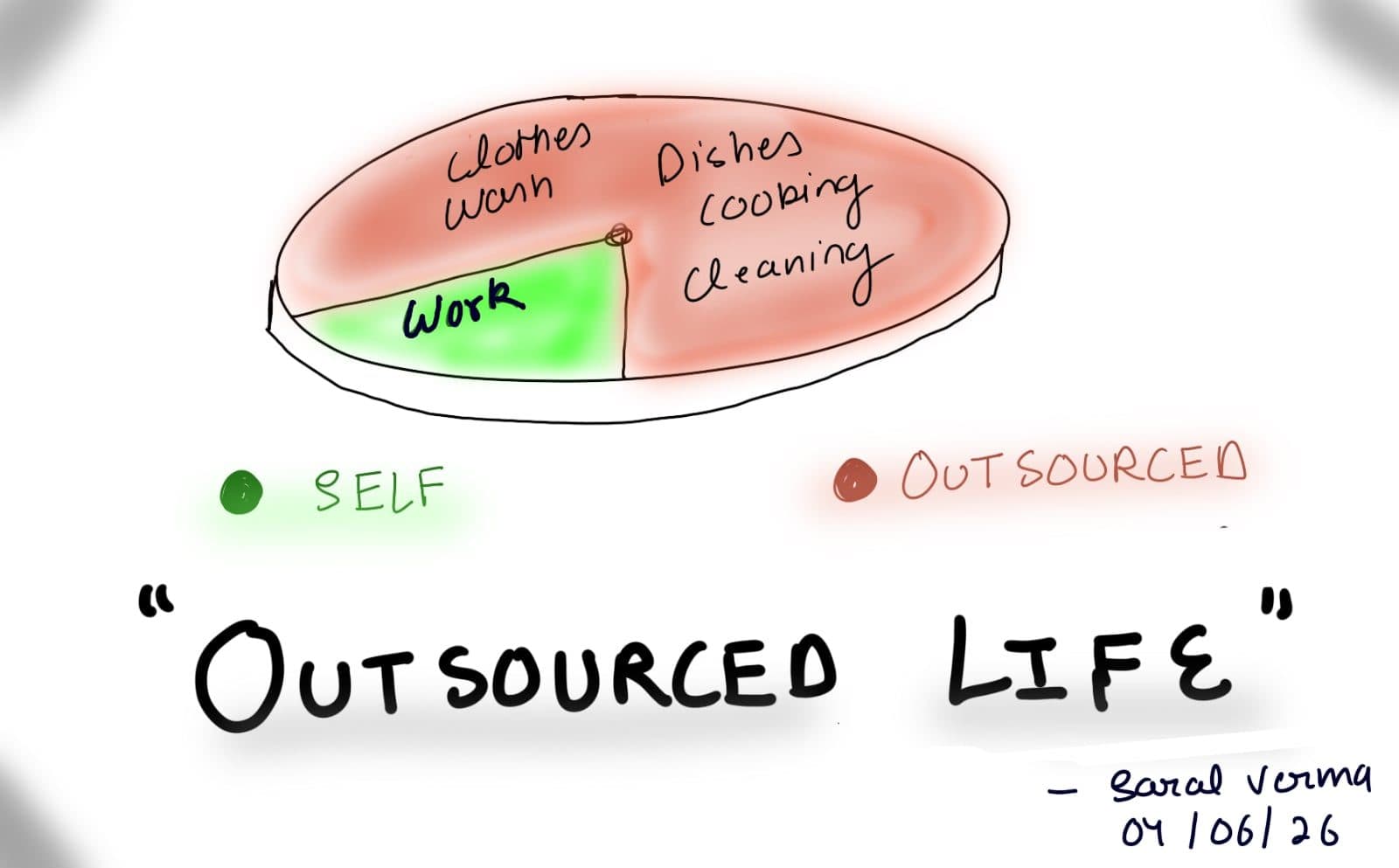
There is a man you know.
He owns two apartments. Flies business class. Has a chef, a driver, a housekeeper. Every inconvenient part of life has been outsourced. He never waits in queues, never washes a dirty pan, never sits in traffic. He has removed friction from his life the way you'd remove stones from a garden path.
And yet.
He cannot sleep. He feels hollow in ways he cannot explain at dinner parties. He is, quietly, one of the most depressed people in any room he enters.
This is not a sob story about the rich. This is a genuine, research-backed puzzle: Why do wealth and mental illness so often travel together?
First, Let's Look at the Numbers
Before we romanticize struggle or pathologize comfort, let's be clear about what the data actually says.
A World Health Organization analysis found that people living in wealthy, high-income countries are slightly more likely to be depressed than those in low-to-middle-income nations. This runs against every intuition we have about money and happiness.
Research also confirms that anxiety rates among children from affluent families are 20-30% higher than their less wealthy peers, and that rates of depression, substance abuse, and behavioral disorders are measurably elevated in high-income households [5].
A scoping review published in the National Institutes of Health journal summarized it plainly: while having financial resources can protect against depression by meeting basic needs, the relationship between wealth and mental health at higher income levels becomes far more complex and unclear [8].
There is, in fact, a point beyond which more money does not produce more happiness. Most researchers estimate this threshold at roughly (75,000 to )95,000 annual income in today's US economy [4]. Above that, other factors take over. And those other factors are where the story gets interesting.
The Dishwashing Theory (No, Really)
Here is an idea that might sound absurd at first: the people scrubbing their own dishes every night might be doing something profoundly good for their mental health.
In 2015, researchers at Florida State University published a study in the journal Mindfulness that has stuck with me ever since. They asked participants to wash dishes, some mindfully (noticing the warmth of the water, the scent of the soap, the texture of the plates), and some on autopilot.
The results were striking.
The mindful dishwashers reported a 27% decrease in nervousness and a 25% increase in mental inspiration compared to the control group [1]. The act of doing something slow, repetitive, and unhurried produced a measurable shift in psychological state.
A Psychology Today analysis went further: doing undemanding household tasks allows the mind to wander freely, which researchers found actually stimulates more creative thinking than demanding tasks or even resting [9]. Your brain, freed from the tyranny of output, gets to just... breathe.
And when you complete a small chore, folding laundry, clearing a counter, washing a cup, your brain releases a small hit of dopamine. A "tiny win." A quiet confirmation that you exist, you contributed, you made something slightly better.
Rich people, systematically, have removed all of this from their lives.
What Gets Lost When Friction Disappears
Think about what a mundane day actually contains for most people.
You wake up and make tea. You fold yesterday's clothes. You commute through noise and crowds. You cook a simple meal and wash up after. You iron a shirt badly. These are not glamorous moments. But they are grounding ones.
They give your day a rhythm. They give your hands something to do while your mind processes. They connect you, however briefly, to the physical, material world you actually inhabit.
Wealthy people outsource all of this. And in doing so, they often accidentally delete the only parts of the day that were genuinely restorative.
What remains? Work: high-stakes, high-pressure, high-visibility. Or leisure: expensive, planned, performed. There is no middle. No unhurried in-between where the mind can drift without agenda.
This is what I think of as the hollowness of frictionless living.
Post-Success Depression: The Hangover Nobody Talks About
There is a clinical name for something a lot of successful people feel: the arrival fallacy.
It describes the gap between the happiness you expect to feel after achieving a big goal and what you actually feel when you get there. The promotion comes through. The startup exits. The net worth crosses a threshold. And instead of the flood of satisfaction you imagined, there is a strange, deflating quiet.
A Psychology Today clinical essay from April 2026 describes this vividly: someone achieves the thing they spent years working toward and arrives not elated, but hollow. Functioning by every external measure, and yet feeling depressed, numb, and existentially unmoored in ways they cannot quite explain, even to themselves [7].
Psychiatrist Dr. Paul Hokemeyer has a name for what follows: existential depression. The kind that arises not from loss or trauma, but from a profound absence of meaning once the external target is gone [6].
When your whole identity has been built around achieving, and you finally achieve it, what are you?
Cross-national research confirms that depression rates remain stubbornly high in wealthy countries even after controlling for other factors, suggesting economic prosperity alone simply does not protect against the hunger for meaning [8].
The Loneliness No One Sees
There is another layer here that doesn't get discussed enough: wealth is profoundly isolating.
Research from the University of California, Berkeley found that as people accumulate wealth and power, their empathetic capacity towards others tends to decline. Not because they become bad people, but because they become less dependent on others [3]. And dependency, it turns out, is part of what makes human connection real.
When you never need anything from anyone, you stop building the neural and social pathways that make intimacy possible.
Wealthy individuals also report persistent difficulty trusting the motivations behind their relationships. Is this friendship, or proximity to money? Is this love, or a comfortable arrangement? The uncertainty erodes the one thing wealth cannot buy: genuine belonging.
Add to this the performance of being rich. The maintenance of a reputation. The fear of losing what you have. The stress of protecting an image. The American Psychological Association notes that high-level stress related to financial status and social standing is directly linked to elevated rates of anxiety and depression, and this stress is often heightened, not diminished, in people who feel they have more to lose [2].
The Particular Pain of Inherited Wealth
If post-success depression is the burden of the self-made, inherited wealth carries a different kind of damage.
People who inherit significant wealth often struggle with what researchers call a lack of earned identity. They didn't build the thing. They were handed it. And underneath the comfort, there is often a persistent, quiet shame: an inability to answer the simplest question. What did I actually do?
Studies confirm that affluence is a risk factor in adolescent development, not just having money, but how having money distorts values, parenting practices, and relationships. Suburban girls from high-income families were found to be three times more likely to report clinically significant depression than national norms [5].
Children in wealthy households grow up with every material need met, and sometimes every emotional need managed, scheduled, and optimized too. The result is often adults who were never allowed to struggle, never allowed to fail, never allowed to develop the resilience that comes from ordinary hardship.
Why This Matters for All of Us
I want to be careful here, because this piece is not about feeling sorry for rich people.
It is about something else: the quiet wisdom in ordinary life that we are collectively, culturally, racing to eliminate.
The chore. The commute. The slow meal cooked at home. The walk you take because you can't afford a cab. The conversation you have to have because there is no one else to handle it. These inconveniences are also, in disguise, the architecture of a grounded human life.
The productivity culture we live in tells us that friction is failure. That every task you can automate or outsource is a victory. That the goal is to free yourself from the mundane so you can focus on what matters.
But the research whispers something different: the mundane is what matters. It is the texture of being alive. Remove it entirely, and you are left floating in a beautiful, comfortable, purposeless void.
The dishwasher doesn't just clean your plates. Sometimes it cleans your head.
So What Do We Do?
This isn't a call to artificially impoverish yourself or refuse help you genuinely need.
But it might be worth asking: have you outsourced so much of your life that you've lost the thread of it?
Do you cook sometimes, not because you can't afford delivery, but because the act of chopping and stirring is the most present you'll feel all day? Do you walk somewhere when you could take a car, because your body needs to be in the city, not transported through it? Do you sit with a problem instead of immediately hiring someone to solve it?
The research on chores, mindfulness, and meaning all point in the same direction: humans need to be useful to themselves. We need tasks with visible outcomes. We need rhythm and repetition. We need to feel the weight of the world on our hands sometimes.
Wealth's great temptation is to make you a passenger in your own life.
Resist it. Wash your own dishes once in a while.
References
-
Hanley, A.W., Warner, A.R., Dehili, V.M., Canto, A.I., & Garland, E.L. Washing Dishes to Wash the Dishes: Brief Instruction in an Informal Mindfulness Practice. Mindfulness, Florida State University, 2015. sciencedaily.com
-
American Psychological Association. Stress and Socioeconomic Status: The Relationship Between Financial Stability, Social Standing, and Mental Health Outcomes. APA Stress in America Reports. apa.org
-
Piff, P.K. & Keltner, D. Wealth, Power, and Empathic Accuracy. University of California, Berkeley. Referenced in: Keltner, D. The Power Paradox. Penguin Press, 2016.
-
Marcum, C. Income Thresholds, Basic Needs, and Depression: When Does Wealth Stop Helping? PsychCentral, April 2022. psychcentral.com
-
Luthar, S.S. Children of the Affluent: Challenges to Well-Being. Psychological Science in the Public Interest, Vol. 4, No. 1, 2003. Suburban girls from high-income families found three times more likely to report clinically significant depression than national norms.
-
Hokemeyer, P. Existential Depression and the Lack of Purpose Among the Wealthy. Referenced in: Riches and Mental Health: Why Wealthy People Are Not Immune to Depression. Inner Echoes, Medium, September 2024. medium.com
-
Marcotte, N. Why You Feel Empty After Achieving Your Goals: The Arrival Fallacy in Clinical Practice. Psychology Today, April 2026. psychologytoday.com
-
Allen, J. et al. Wealth and Depression: A Scoping Review. Social Science and Medicine, National Institutes of Health, PMC, 2022. ncbi.nlm.nih.gov
-
Baird, B., Smallwood, J., Mrazek, M.D., et al. Inspired by Distraction: Mind Wandering Facilitates Creative Incubation. Psychological Science, Vol. 23, No. 10, 2012. Referenced in: 8 Surprising Psychological Benefits of Routine Daily Tasks. Psychology Today, August 2022.
Letters
If an essay made you think, the next one might too.
Occasional notes on science, psychology, and the experiments I should probably not be running at 2am. No growth hacks. No weekly guilt.
SubscribeKeep reading
Culture
you are still a kid
Calling someone a kid is not a description. It is a power move. On gerontocracy, freedom, and the first generation with the language to push back.
Culture
A Man in Rain
Rain does not mean sadness. It means uncertainty. On weather, mood, and why an unreadable figure stays with you.
Culture
Good at Looking Good
On moral performance, the psychology of public correction, and why doing visible small things can replace doing meaningful large ones.