BlogCulture · 11 min read
Good at Looking Good
On moral performance, the psychology of public correction, and why doing visible small things can replace doing meaningful large ones.
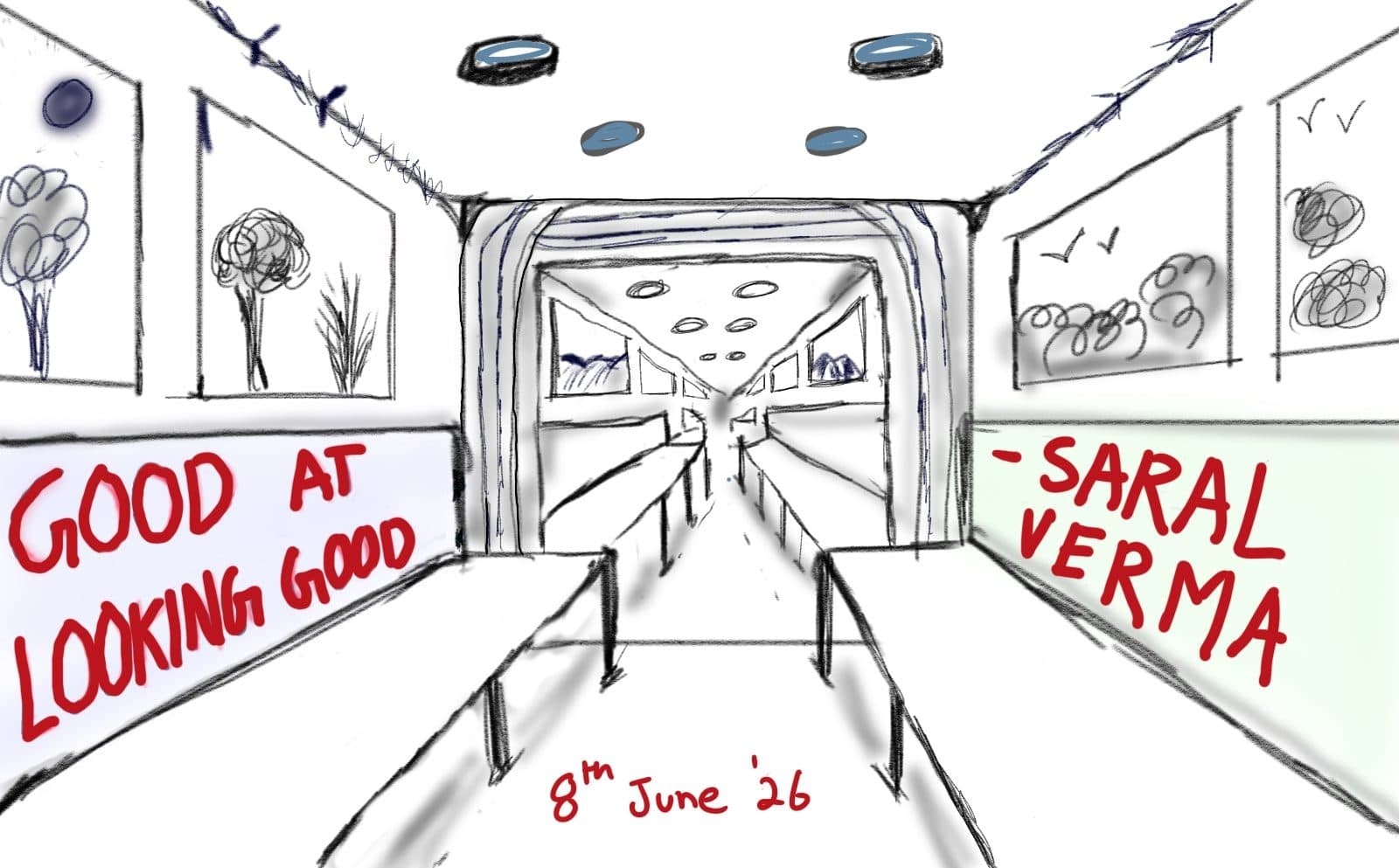
The Subway Scene Nobody Asked For
Picture this. You are on the Delhi Metro. A woman in her forties spots an elderly gentleman standing near the door. She turns to a young person seated nearby, someone who has been sitting quietly, earphones in, causing no harm to anyone. She taps the seat. She makes eye contact. She performs the universal gesture of "you should get up."
The elderly man is fine. He has been standing for two minutes. He did not ask for help.
But this is not really about the elderly man.
It never was.
What just happened is one of the most psychologically revealing things a person can do in public: intervene in a low-stakes situation, with visible authority, in front of an audience, at zero personal cost. A moral performance. Applause optional.
The Name for What This Is
Psychologists have a few terms for it. Moral grandstanding, identified and formalised by philosophers Tosi and Warmke, is the use of moral rhetoric not to persuade or improve anything but to enhance one's own reputation and status [1]. Virtue signalling, described more colloquially, is the public expression of values designed to communicate group membership and good character, with the actual outcome being secondary [2].
Virtue signalling and moral grandstanding draw on social identity. People derive part of their self-concept from the groups they belong to. When moral issues become tied to group identity, expressing the correct moral stance can strengthen belonging.
The subway enforcer is not necessarily a bad person. In fact, that is almost certainly not what they are. They genuinely believe they are doing something good. And that is precisely what makes this worth examining.
The Research Is Uncomfortable
In 2010, Nina Mazar and Chen-Bo Zhong at the University of Toronto ran a now-famous experiment. Participants shopped in an online store. One version offered eco-friendly products, the other standard ones. Afterwards, both groups played a game where they could cheat to earn more money.
The group that bought eco-friendly products cheated significantly more [3].
This is the moral licensing effect. By performing moral behaviour, people can recover their good moral self. But once prior moral deeds elevate the moral self, it reduces people's need to regulate their behaviour to preserve it. In short, doing a visible good deed gives the brain a kind of permission slip for what follows.
Some studies found that people license themselves not only after good deeds but after good intentions. Thinking about helping sometimes produces the same effect as helping.
Which means the woman in the Metro who corrected the young person's seating choices may feel, for the rest of that commute, like someone who has done their bit. She has been virtuous. She performed it publicly. The psychological ledger is balanced.
Whether she actually does anything meaningful today, in her work, in her home, in the world, is a separate matter entirely. And research suggests the visible act may have made that less likely, not more.
Who Does This and Why
Virtue signalling draws on deep psychological drives, the need for social belonging, moral status, and identity reinforcement, that predate social media by millennia. Moral licensing research shows that publicly signalling virtue can make people more likely, not less, to behave unethically immediately afterward.
A 2026 study published in Political Psychology found that moral grandstanding, particularly in its more aggressive form, is driven less by political affiliation than by underlying status dynamics [4]. It is, at its core, a social dominance behaviour dressed in the language of ethics.
Performative activism is fundamentally about in-group signalling and identity display, not about the cause itself. The person posts, shares, changes the profile frame. The cause gets visibility; the activist gets social credibility. Whether anything changes is secondary.
The pattern is not exclusive to any age group or class. But it tends to cluster around people who feel a gap between the authority they believe they deserve and the authority they actually hold. Correcting a stranger gives you, briefly, the experience of being someone who sets the terms.
The Gender Angle Nobody Wants to Say Out Loud
This behaviour appears across genders. But there is a specific version of it, rooted in displaced authority, that falls disproportionately on women. And the data makes the structural reason for that hard to ignore.
World Bank data puts India's female labour force participation at 32.4% in 2025, against a global average of 51.1% [5]. Unpaid care work is the primary reason. Women in caregiving roles show 23% lower bank account usage and 67% lower digital financial literacy compared to men [6]. The work they do, running a household, raising children, managing the invisible logistics of daily life, is real, exhausting, and almost entirely unrecognised by the economy or by society at large.
When your primary domain generates no formal status, no salary, no performance review, and no public acknowledgment, the psychological pressure to assert authority somewhere else becomes significant. The Metro correction, the unsolicited parenting advice, the public enforcement of social norms: these are often not personality defects. They are symptoms of a structural problem. Authority that has nowhere legitimate to go finds the nearest available outlet.
Carol Gilligan's foundational research found that women approach morality through an ethics of care, emphasising relationships and responsibilities [7]. A Royal Society study across 67 countries confirmed that women consistently score higher on care-based moral foundations than men [7]. That orientation toward care is genuine. But when care is the only domain available to someone, it can quietly become control.
To be clear: this is not a critique of women. It is a critique of the conditions that produce this behaviour in anyone. The same 2026 Political Psychology study found that men are actually more prone to the dominant, confrontational form of moral grandstanding, the kind designed to shame or outcompete others [4]. What tends to be more common in women is the quieter, relational version: correcting, guiding, enforcing, often out of genuine concern, but without the invitation.
The question worth asking is not why certain people do this. It is what we have built that makes it feel necessary.
The Cost Nobody Calculates
The problem is not that these behaviours are performed. The problem is what they replace.
Slacktivism describes feel-good actions that have zero political or social impact. It considers low-risk, low-cost behaviour done for a sense of morality and achievement without heavy commitment.
Every hour spent enforcing minor social codes in public spaces is an hour not spent on the structural problems that actually produce the conditions being complained about. Every post written to signal the correct position is energy not spent organising, building, funding, or doing. The moral accounting has been satisfied. There is no urgency left.
Aligning with a cause can create the sense of moral credit without any action. People perform solidarity in public and then engage in hostile behaviour in the same thread.
The effect becomes stronger when the good deed is public. When others praise the visible act, the person becomes increasingly convinced of their own virtue, and increasingly resistant to evidence that contradicts it.
Performance Is Not the Same as Contribution
There is a clean distinction worth drawing here.
Contribution is costly. It takes time, money, discomfort, or risk. It often happens in private, with no audience. It does not generate immediate social reward. Building something, teaching properly, showing up consistently, making a hard call, admitting you were wrong: these are contributions.
Performance is cheap. It is visible by design. It generates social reward immediately. It satisfies the psychological need to be seen as good without demanding much of the person doing it.
Neither is morally simple. Considerable research provides evidence for the collective benefits outward displays of virtue afford as tools for cultivating cultures of virtuous norms that perpetuate and inspire acts of good within cooperative societies. Public expressions of values are not automatically hollow.
But the test is straightforward. Ask: would this person still do it if no one was watching? Would the Metro enforcer help the elderly man herself, quietly, if the young person had not been there to correct? Would the post go up if there were no likes?
The answer tells you almost everything.
What to Do About It
Two separate problems. One is encountering these people. The other is becoming one.
When you encounter it
The worst response is a public counter-performance. Calling someone out loudly for their moral performance is its own kind of performance. You become the thing you are reacting to, just with a different script.
The more effective move is to simply not give the behaviour the audience it is looking for. Moral grandstanding feeds on reaction. A calm, neutral response, or no response at all, removes the reward. You do not have to validate the correction or fight it. You can just let it pass. The person enforcing the Metro seating chart does not need your agreement to feel righteous, but they do need your attention. Withhold it and the interaction loses its charge entirely.
If it is someone in your life rather than a stranger, the more honest move is a private conversation rather than a public one. Research on moral identity suggests that people are far more responsive to genuine one-on-one engagement than to being challenged in front of an audience, where defensiveness kicks in almost immediately [8].
When you feel yourself becoming one
This is the harder and more important question.
Miller and Effron found that moral licensing occurs mainly when good actions are framed as isolated events. When people build their identity around consistent principles rather than individual acts, the licensing effect largely disappears [8]. In other words, the antidote to performing goodness is making it structural rather than episodic. Not "I did a good thing today" but "this is how I operate."
A few honest checks help. Before speaking up publicly about something, ask whether you would still do it if the outcome were private and uncelebrated. Before sharing something online, ask what you expect to happen as a result and whether that expectation is about the cause or about yourself. Before correcting someone in public, ask whether a quieter version of the same intervention would work just as well.
None of this means staying silent or disengaging. It means being honest about what is driving the action. Contribution and performance can look identical from the outside. The difference lives entirely in the intention, and only you have access to that.
References
-
Tosi, J. & Warmke, B. Grandstanding: The Use and Abuse of Moral Talk. Oxford University Press, 2020.
-
Westra, E. Virtue Signalling and Moral Progress. Philosophy & Public Affairs, 2021. researchgate.net
-
Mazar, N. & Zhong, C.B. Do Green Products Make Us Better People? Psychological Science, Vol. 21, No. 4, 2010.
-
Jungkunz, S. The Age of Virtue Signalling: Moral Grandstanding as Competitive Display Among Young Men. Political Psychology, Wiley Online Library, March 2026. onlinelibrary.wiley.com
-
World Bank. Female Labour Force Participation Rate, India. World Development Indicators, ILO Modelled Estimates, 2025. data.worldbank.org
-
R Discovery. Invisible Labour, Unequal Burden: Gender, Institutions, and the Unpaid Care Economy in India. October 2025. discovery.researcher.life
-
Gilligan, C. In a Different Voice: Psychological Theory and Women's Development. Harvard University Press, 1982.
-
Miller, D.T. & Effron, D.A. Psychological License: When It Is Needed and How It Functions. Advances in Experimental Social Psychology, Vol. 43, 2010.
Letters
If an essay made you think, the next one might too.
Occasional notes on science, psychology, and the experiments I should probably not be running at 2am. No growth hacks. No weekly guilt.
SubscribeKeep reading
Culture
you are still a kid
Calling someone a kid is not a description. It is a power move. On gerontocracy, freedom, and the first generation with the language to push back.
Culture
A Man in Rain
Rain does not mean sadness. It means uncertainty. On weather, mood, and why an unreadable figure stays with you.
Culture
The Quiet Crisis of the Comfortable
On frictionless lives, hollow mornings, and the strange comfort of washing your own dishes.