BlogScience · 9 min read
The Walls Have Been Talking
On color, light, green spaces, and the invisible design of your emotional life.
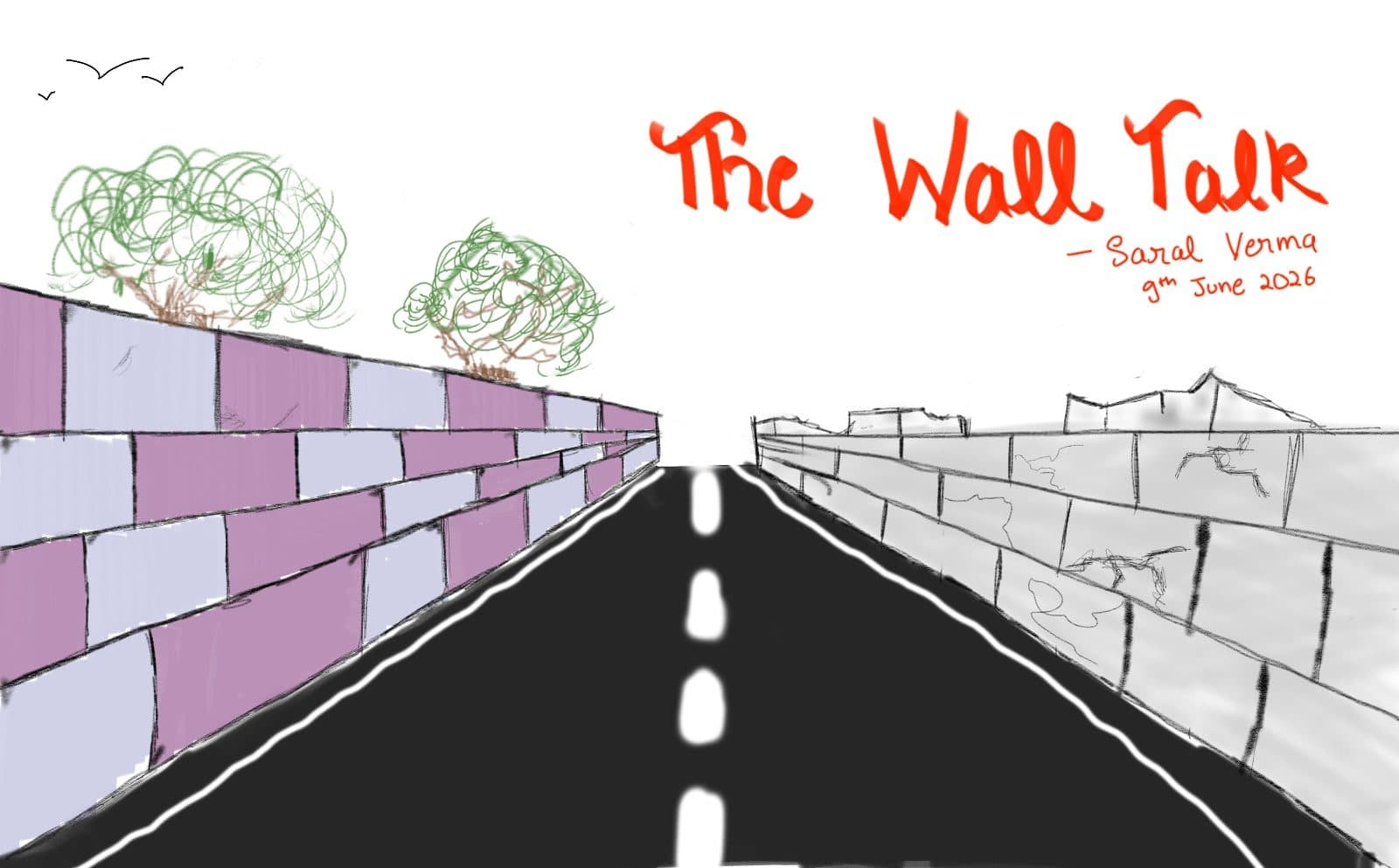
Nobody Told You the City Was Talking to You
You walk into one city and something lifts. The streets feel alive. You slow down without deciding to. You stay longer than you planned.
You walk into another and something tightens. Nothing bad happens. But you want to leave.
You probably blamed your mood. A bad night's sleep, maybe. Stress from work. Something you ate.
But there is a quieter explanation. And it has been hiding in the walls the whole time.
Why Some Cities Feel Alive and Others Don't
Researchers at ScienceDirect published a study in 2025 analyzing the relationship between urban street colors and human perception [1]. The finding was straightforward but striking: the prevalence of blue and green in urban environments is positively correlated with emotions of prosperity and vitality, while red and yellow are negatively correlated with feelings of safety.
It is not just which colors appear. It is their saturation and brightness. A 2026 study published in Frontiers in Public Health found that high color harmony in street environments induces positive emotional states including tranquility and relaxation, reducing cognitive load and facilitating seamless visual processing [2]. Too much brightness increases boredom. Too little reduces attractiveness and vitality entirely.
The cities that feel alive are not accidents. Lisbon's terracotta and blue tile. Jaipur's deliberate pink. The cool greys and greens of Copenhagen. These are not aesthetic choices that happened to work. They are environments that were, sometimes without knowing it, engineered toward a specific emotional frequency.
A systematic review published in 2025 analyzing three decades of research confirmed that luminance and saturation are the most robust predictors of how a person feels in an urban space [3]. The review found that color operates across four dimensions in cities: psychological and physiological effects, cultural expression and place identity, functional zoning and wayfinding, and environmental adaptation. Every city is making choices across all four, whether the designers knew that or not.
The cities that feel incoherent, where nothing quite goes together, where concrete meets neon meets unpainted steel, are not just ugly. They are cognitively exhausting. The brain works harder to process visual environments that lack harmony, and that work shows up as fatigue, irritability, and a vague sense of wanting to be somewhere else.
Green Spaces and Crime: The Data Nobody Expected
In 2022, researchers at the University of Edinburgh, North Carolina State University, and Clemson University published one of the most comprehensive studies ever conducted on green space and crime [4]. They analyzed data from 301 American cities with populations above 100,000, using 60,000 neighbourhood units, FBI crime statistics, and census data.
The results were consistent enough to be uncomfortable for anyone who thinks urban crime is purely a poverty problem.
Green space was a predictor of reduced violent and property crime risk in 300 of the 301 cities studied, even after controlling for income, demographics, and poverty [4]. The lone exception for property crime was Cape Coral, Florida. For violent crime, only Chicago, Detroit, and Newark did not follow the pattern, all three cities with deeply entrenched structural problems that researchers acknowledged may simply be impervious to many interventions.
The numbers at the local level are sharper. Baltimore saw a 12% drop in all outdoor crimes for every 10% increase in tree canopy. In Chicago, buildings with more green space experienced 56% fewer violent crimes.
In Flint, Michigan, a community-engaged greening program on vacant lots was associated with nearly a 40% reduction in assaults and total violent crime [5].
The mechanism is not fully settled in the literature, but the leading explanations involve stress reduction and social cohesion. Green spaces lower cortisol. They invite people outdoors. When people are outdoors in a pleasant environment, they see each other, interact, and create informal surveillance. High quality maintained green space discourages criminal behavior not by deterrence but by changing the social texture of the neighborhood itself [4].
The inverse is also true. Low quality, unmaintained green space, the overgrown lot, the broken park, can actually increase crime by creating concealment. The intervention is not just adding green. It is adding maintained, accessible, well-designed green. The difference matters enormously.
What makes this finding troubling is the distributional inequality underneath it. Research shows that low-income communities and communities of color consistently have lower quality parks and reduced access to green space than wealthier neighborhoods in the same cities [4]. The places that would benefit most from green space are the ones with the least of it.
Golden Hour: Why That Light Does Something to You
There is a specific quality of light that appears twice a day, for roughly an hour each time, just after sunrise and just before sunset. Photographers know it as golden hour. The angle of the sun is low enough that light travels through more of the atmosphere, scattering shorter blue wavelengths and leaving the longer red and orange ones.
The result is a warm, diffused light with a color temperature of approximately 2000 to 3000 Kelvin.
That temperature matters more than you might expect.
Research published in ScienceDirect found that warm lighting at 2700K evokes feelings of happiness, joy, relaxation, and privacy compared to cool lighting at 5600K [6]. The University of British Columbia found that people working under warm lights generate 23% more creative solutions and show increased openness to new ideas [7]. The longer red wavelengths reduce cortisol levels and promote relaxation, which allows for more flexible thought patterns.
Golden hour delivers precisely this quality of light, for free, twice a day, to anyone who happens to be outside.
But why does it so reliably produce something that feels like nostalgia?
The answer involves two systems working together. The first is physiological. Golden hour light triggers the same neural pathways as warm indoor lighting, promoting relaxation and reducing the alertness signals that come from blue-enriched daylight. The body interprets it as a cue for winding down, which creates a softening of the usual mental chatter.
The second is memory-based. Research published in the Journal of Personality and Social Psychology found that nostalgia improves mood, enhances social support, and induces future optimism [8]. It activates the brain's default mode network, hippocampus, and prefrontal cortex simultaneously, connecting autobiographical memory with present-day mood states. In a 2023 study published in Emotion, researchers found that triggering nostalgia among lonely individuals helped them restore greater meaning in their lives [9].
Golden hour has been photographed, painted, and written about across every culture for centuries. Every memory you have of being outside at that time, childhood evenings, a particular trip, a moment that mattered, is now encoded alongside that specific quality of light. When the light returns, so does the emotional residue.
It is not sentimental. It is neurological.
What Your Environment Is Actually Doing to You
The three things described in this piece, architecture color, green space, and golden hour light, all operate through the same underlying mechanism. They are environmental inputs that your nervous system processes before your conscious mind gets involved.
You do not decide to feel calm in a well-designed city. You do not choose to feel safer near a maintained park. You do not elect to feel nostalgic at 6pm on a clear evening. These responses happen below the level of deliberate thought, through cortisol fluctuations, through light receptor cells in the retina, through the involuntary retrieval of autobiographical memory.
The implication is worth sitting with. Most people attribute their mood to their internal life: their discipline, their mindset, their emotional health. But a significant portion of how you feel on any given day is a function of what you walked through that morning.
The Takeaway: Design Your Inputs
You probably cannot redesign your city. But you can be more deliberate about your environment.
Walk through streets with trees and color when you can, rather than through grey corridors. Take the longer route if it is greener. Seek out parks that are well maintained, not because nature is romantic but because your nervous system is actively responding to it in measurable ways.
Go outside around golden hour at least occasionally. Not to photograph it. Just to be in it. The light is doing something to your cortisol and your memory that a screen cannot replicate.
And if you are ever in a position to advocate for green space in your neighborhood or city, know that you are not asking for something decorative. You are asking for something that the data shows reduces crime, reduces stress, and increases the likelihood that people will take care of the space around them.
The city is talking to you all the time. It helps to know what it is saying.
References
-
ScienceDirect. Perception of Urban Street Visual Color Environment Based on the CEP-KASS Framework. 2025. sciencedirect.com
-
Frontiers in Public Health. How Colors of the Living Street Interfaces Affect Positive Emotions in Winter. January 2026. frontiersin.org
-
ResearchGate. Color in Urban Public Spaces: A Systematic Review for Evidence-Based Design. December 2025. researchgate.net
-
University of Edinburgh, NC State, and Clemson University. Green Spaces in Cities Linked to Crime Risk. Published in ScienceDaily, October 2022. ed.ac.uk
-
National Environmental Education Foundation. How Greening Communities Can Reduce Violence and Promote Health. April 2024. neefusa.org
-
ScienceDirect. The Impact of Color Correlated Temperature and Illuminance Levels of Office Lighting on Stress and Cognitive Restoration. May 2025. sciencedirect.com
-
PacLights. The Psychology of Office Light Color: How to Boost Mood and Productivity. October 2025. paclights.com
-
Psychologs. The Science Behind How Nostalgia Fuels Optimism. November 2024. psychologs.com
-
American Psychological Association. Feeling Nostalgic This Holiday Season? It Might Help Boost Your Mental Health. December 2023. apa.org
Letters
If an essay made you think, the next one might too.
Occasional notes on science, psychology, and the experiments I should probably not be running at 2am. No growth hacks. No weekly guilt.
SubscribeKeep reading
Science
You Dream Every Night. You Just Do Not Remember.
On what dreams actually are, what Freud got embarrassingly wrong, and why forgetting them might be by design.
Science
Voices Inside the Head
What happens to the brain — and to love — when you live in more than one language.
Science
The Intelligence Metric That Does Not Exist
What IQ actually measures, and why the intelligence that changes your life cannot be tested.